Many shoppers mix up fleece and terry fabrics in casual clothing. The main difference between fleece and terry lies in their structure and surface texture. Fleece typically has a brushed surface that provides warmth and softness, while terry fabrics feature looped surfaces that offer breathability and moisture absorption. For example, a custom fleece hoodie is a popular choice for warm and comfortable casual wear.
Your choice depends on what you plan to use it for. For cold-weather layers, fleece is the best pick. For gym wear and towels, terry works well because it absorbs moisture. In 2025, the global market for these fabrics hit $32.62 billion, and steady growth is expected through 2032.
This post explains each fabric, then compares them on key features. Knowing these differences helps you choose the right material for any piece of clothing.
Key Takeaways
- Fleece is a synthetic fabric that traps heat, so it’s great for cold weather.
- Terry is a natural fabric with loops that soak up moisture and let air flow through.
- Choose fleece to stay warm and insulated in winter clothes.
- Choose terry when you want breathable fabric that handles sweat well in activewear.
- Choose the fabric that matches the weather and how active you will be for the best results.
What Is Fleece Fabric? Construction, Feel, and Key Features
Fleece fabric is made from man-made fibers, mostly polyester. Makers can create this polyester from recycled plastic, which makes fleece a greener choice than many people think. The same base fiber is used in sherpa fleece, polar fleece, and microfleece. Some sherpa fleece blends add acrylic for extra softness. This man-made origin sets fleece apart from natural fabrics and explains many of its performance features.
How Fleece Construction Creates a Soft and Warm Surface
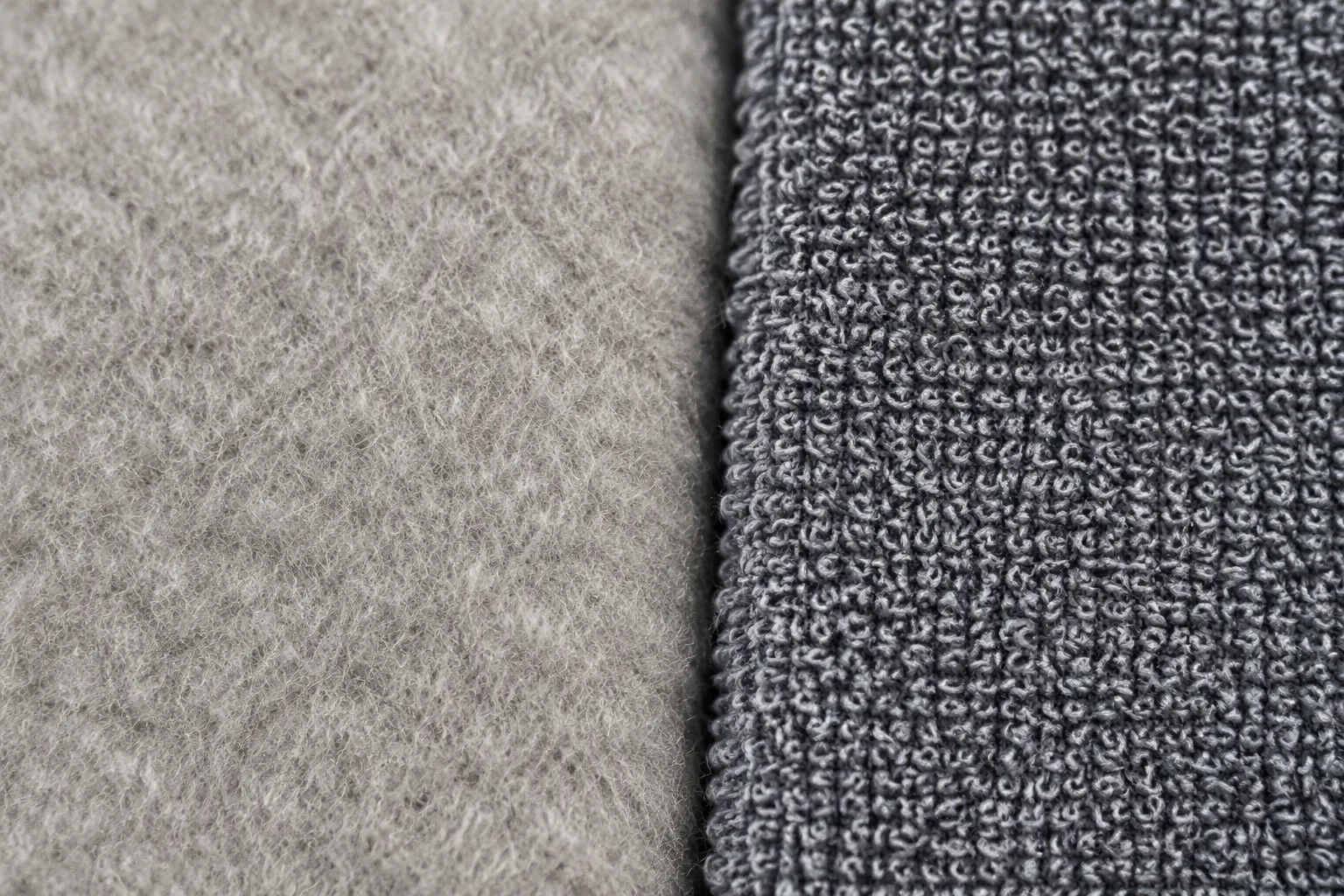
Fleece gets its soft feel from a machine brushing process. Machines lift fibers on the fabric surface, creating a fluffy, padded layer. This brushing removes loose fibers while raising others to form a puffy texture. Fleece can be brushed once on one side or twice on both sides for extra softness.
The lifted fibers trap air inside the fabric, forming tiny air pockets. Since air does not conduct heat well, these pockets act as a warm barrier. The knit structure directly affects warmth levels.
| Knit Structure | Insulation Level | Typical Use |
|---|---|---|
| Loosely knitted (e.g., woolen knit) | Very high | Sweaters, scarves |
| Fleece knit | High | Jackets, blankets |
| Cotton knit | Moderate | T-shirts, undergarments |
| Polyester knit | Variable | Sportswear, thermal wear |
Porosity and insulation link: Brushing or raising a knitted fabric makes it more porous. More pores mean more trapped air, and since air is a poor heat conductor, higher porosity leads to better thermal insulation. This is why fleece, which is brushed to raise its surface, stays warm even though it is a knit.
Key Fleece Fabric Features for Comfortable Apparel
Fleece gives several useful benefits for cold-weather clothes. Its polyester fibers hold heat well while staying light. The fabric stays warm even when wet because polyester repels water instead of soaking it up. This water-repelling nature also makes fleece dry fast after rain or sweat.
Durability is another strength. Man-made fleece resists shrinking and stretching through many washes. It keeps its insulating properties even after heavy use and moisture. The fabric also offers balanced breathability, letting air flow without causing overheating during activity.
For apparel brands that want quality fleece clothes, NBJM works as a custom fleece maker with over 20 years of experience. The company makes eco-friendly fleece jackets, hoodies, pullovers, and joggers using sustainable materials. Brands can customize fabric weight, color, and design details to match their needs. This mix of performance and customization makes fleece a solid choice for cold-weather collections. Knowing the difference between fleece and terry helps brands pick the right fabric for each garment purpose.
What Is Terry Fabric? Construction, Texture, and Key Features
Terry fabric is different from fleece because it has loops and uses natural fibers. Makers usually use cotton to create terry, which makes it soft and able to soak up water. French terry, a common type, has loops on one side and a smooth surface on the other. This design makes it lighter and more breathable than fleece. Knowing how fleece and terry differ helps buyers pick the right fabric.
How Terry Fabric Construction Creates Its Loopback Surface
The knitting process creates the loops that define French terry fabric. These loops stay uncut, which adds more surface area to the fabric. Makers can change the size and density of these loops to get the right amount of absorbency and texture.
| Feature | French Terry Fabric | Terry Cloth Fabric |
|---|---|---|
| Construction | Knit (looped inside, smooth outside) | Woven (loops on both sides) |
| Feel | Lightweight, breathable, soft | Thick, fluffy, absorbent |
| Stretch | Moderate stretch | Minimal stretch |
| Best For | Sweatshirts, joggers, loungewear | Towels, bathrobes, spa wear |
| Weight | Lighter | Heavier |
Cotton is still the most common fiber used for terry fabric. Its natural softness feels comfortable against the skin. Its ability to soak up water helps the loops hold and keep moisture. Cotton lets air move through, which reduces dampness. Cotton also lasts long and handles many washes.
Key Terry Fabric Features for Breathable Apparel
French terry’s breathability comes from how it is built. The fabric has a soft looped inner layer that lets air move freely. Fleece goes through a brushing process that creates a fluffy surface. That fluffy surface traps body heat and moisture, making fleece much less breathable. Even heavier French terry still lets air flow well.
| Property | French Terry | Fleece |
|---|---|---|
| Fabric composition | Cotton with looped back texture | Polyester with plush, fuzzy texture |
| Breathability | High – allows air flow, keeps body cool | Low – traps heat and humidity |
| Moisture management | Absorbent, wicks moisture away | Not specified as moisture-wicking |
| Insulation | Moderate – suitable for mild temperatures | High – traps body heat for cold weather |
French terry also handles moisture well. The cotton fibers pull sweat away from the body. The fabric stretches a bit, which makes movement comfortable. It also lasts through many washes without shrinking or stretching.
For apparel brands that want quality French terry, NBJM is a trusted French terry supplier. The company offers custom terry manufacturing with over 20 years of experience. Brands can order French terry hoodies, sweatshirts, and other garments with customizable fabric weight, color, and design details.
Fleece vs. Terry: Key Differences in Fabric Performance
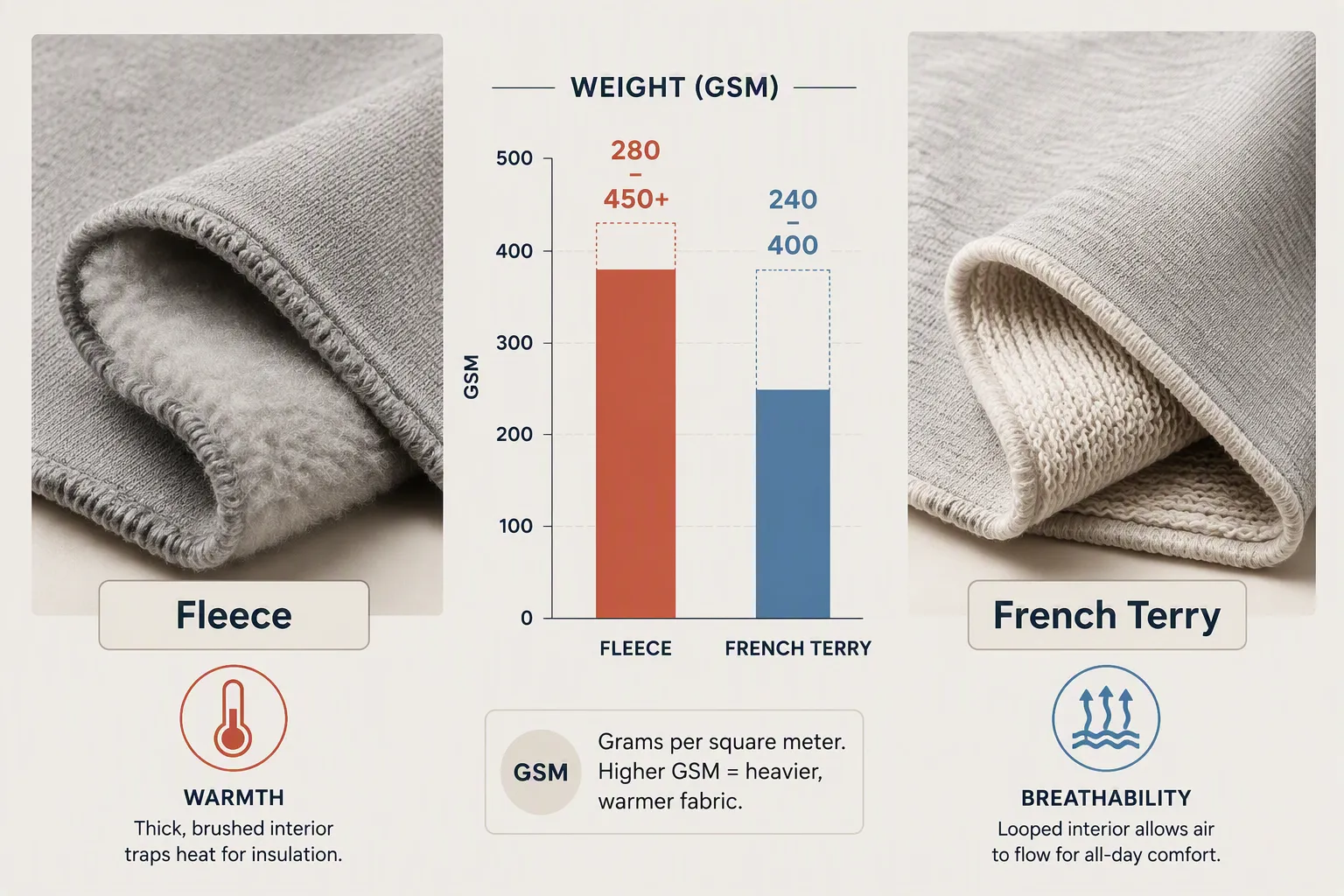
Fleece and terry differ mainly in their surface structure and how they perform in different garment applications. Fleece has a brushed, insulating surface that provides a warmer feel, while terry uses looped yarns to create a more breathable and absorbent structure. These differences affect comfort, fabric weight, care requirements, and decoration performance.
Fleece vs. Terry for Warmth, Weight, and Insulation
Fleece generally provides more warmth and insulation than terry because its brushed surface traps more air. This makes it a popular choice for hoodies, sweatshirts, jackets, and other cold-weather garments.
Terry, including French terry, has a looped inner structure that allows more airflow. It is often preferred for lightweight hoodies, sweatshirts, loungewear, and transitional-season clothing where moderate warmth and better ventilation are important.
Fabric weight also varies by construction and fiber content. Both fleece and terry are available in different GSM ranges, so buyers should consider fabric weight together with surface structure when selecting materials for a specific garment.
Fleece vs. Terry for Breathability and Moisture Management
Terry is generally more breathable because its looped structure allows air to move more freely through the fabric. This makes it suitable for garments designed for everyday wear, light activity, and warmer conditions.
Fleece is designed more for warmth and insulation. However, polyester fleece can provide good moisture-wicking and quick-drying performance because synthetic fibers move moisture away from the skin more effectively.
Fiber composition therefore matters as much as fabric construction. Cotton-rich terry offers good absorbency and a natural hand feel, while polyester fleece is often selected for faster drying and moisture management.
Fleece vs. Terry for Softness, Texture, and Hand Feel
Fleece has a smooth outer surface and a soft, brushed inner face. The raised fibers create a plush and warm hand feel, making fleece suitable for premium hoodies, sweatshirts, blankets, and cold-weather apparel.
Terry has a distinctive looped texture on the inside. It feels lighter and more structured than brushed fleece while still providing a comfortable surface against the skin. French terry is especially popular when brands want a balance between softness, breathability, and a clean garment shape.
For apparel brands, the choice often depends on the desired product experience: fleece emphasizes a cozy and plush feel, while terry provides a lighter and more textured feel.
Fleece vs. Terry for Durability, Pilling, and Wash Care
Both fleece and terry can provide good durability when the appropriate fiber blend, yarn quality, and fabric construction are used. However, their surface structures require different care considerations.
Brushed fleece can develop pilling or surface fuzz over repeated friction and washing, particularly when lower-quality fibers or yarns are used. Proper finishing and fabric selection can help improve resistance to these issues.
Terry does not have the same brushed surface, but its loops can catch or pull if exposed to rough surfaces or excessive abrasion. Both fabrics should be washed according to their fiber composition and finishing requirements to help maintain appearance and performance.
For bulk apparel production, brands should evaluate pilling resistance, dimensional stability, colorfastness, and shrinkage before selecting a fabric for long-term use.
Fleece vs. Terry for Printing and Embroidery Applications
Both fleece and terry can be used for screen printing, heat transfer, embroidery, and other garment decoration methods, but their surface structures affect the final result.
Fleece has a raised, brushed surface that can provide a soft background for printing but may require suitable printing settings to achieve clean and consistent graphics. Embroidery may also need appropriate backing and stitch density to prevent the design from sinking into the fabric.
Terry has a looped inner surface that can create a different base for decoration. Smooth-faced French terry is generally easier to print on, while embroidery may require stabilizing materials to control fabric movement and maintain design definition.
For custom apparel production, brands should select the printing or embroidery method together with the fabric weight, surface finish, and design requirements. Sampling before bulk production is recommended to confirm print clarity, embroidery definition, and overall garment appearance.
How to Choose Between Fleece and Terry for Different Clothes Needs
Picking the right fabric for a clothing line takes careful thought. Brands must think about several things before choosing a material. The choice affects how customers feel about the garment and if it meets their needs.
Pick Fleece for Warm Hoodies and Cold-Weather Clothes
Fleece works best in cold weather. Its brushed inner side traps air and keeps the body warm. For winter items, holiday products, and cold-weather lounge sets, fleece gives the cozy comfort customers want. The fabric’s strong heat retention makes it the best choice for pure warmth.
Think about the activity level when picking fleece weight. Light or midweight fleece works well for high-energy activities like hiking or ski touring because it lets air flow. Midweight fleece fits casual everyday wear, such as walking around town or sitting by a campfire. Heavyweight fleece gives the most warmth for sitting still in cold weather when staying warm matters most.
Fleece also works great as a mid-layer in a layering system. It adds warmth between a base layer and a waterproof shell for full weatherproofing. For outdoor gear and long time in cold, fleece gives better warmth and lasting power against harsh conditions.
Pick Terry for Light Sweatshirts and Casual Clothes
French terry works well in changing weather and active lifestyles. Its looped inside soaks up sweat without adding bulk, making it great for clothes worn across seasons. The smooth front lets air flow while the looped back keeps warmth without being heavy.
For mild climates and warm weather, French terry stops overheating. Its breathability allows air to move during exercise, keeping the body dry. This makes it good for high-energy activities and spring or summer events. The fabric’s medium stretch supports easy movement all day.
French terry fits many casual clothes. Sweatshirts, shorts, joggers, and loungewear all gain from its soft, absorbent nature. For standard hoodies, weights of 300–500gsm work well. Heavier weights of 550–650gsm make structured outerwear or premium items. The fabric also goes well with jeans and sneakers for a relaxed but neat look, making it a flexible choice for year-round basics.
Knowing the difference between fleece and terry helps brands match fabric to use. Fleece gives warmth for cold days. Terry gives breathability for active, changing weather wear.
Our Fleece and Terry Fabric Solutions for Apparel Brands
NBJM has over 20 years of experience in textile manufacturing for every wholesale order. The company makes more than 10 million ready-to-wear garments each year and ships to over 30 countries. Brands that want custom fleece and French terry apparel get a full-service partner that handles everything from the first idea to large-scale production.
Custom Fleece and Terry Fabrics for Different Apparel Designs
Every NBJM order starts with picking the fabric. Clients choose from sustainable materials like organic cotton, recycled polyester, and EcoVero Lenzing. These eco-friendly choices meet the growing need for responsible apparel without losing performance.
Weight customization lets brands control how the garment feels. Fleece can be made from 100 GSM to 450+ GSM, while French terry ranges from 180 GSM to 400+ GSM. A light 180 GSM terry suits summer hoodies, while a heavy 450 GSM fleece works for premium winter outerwear.
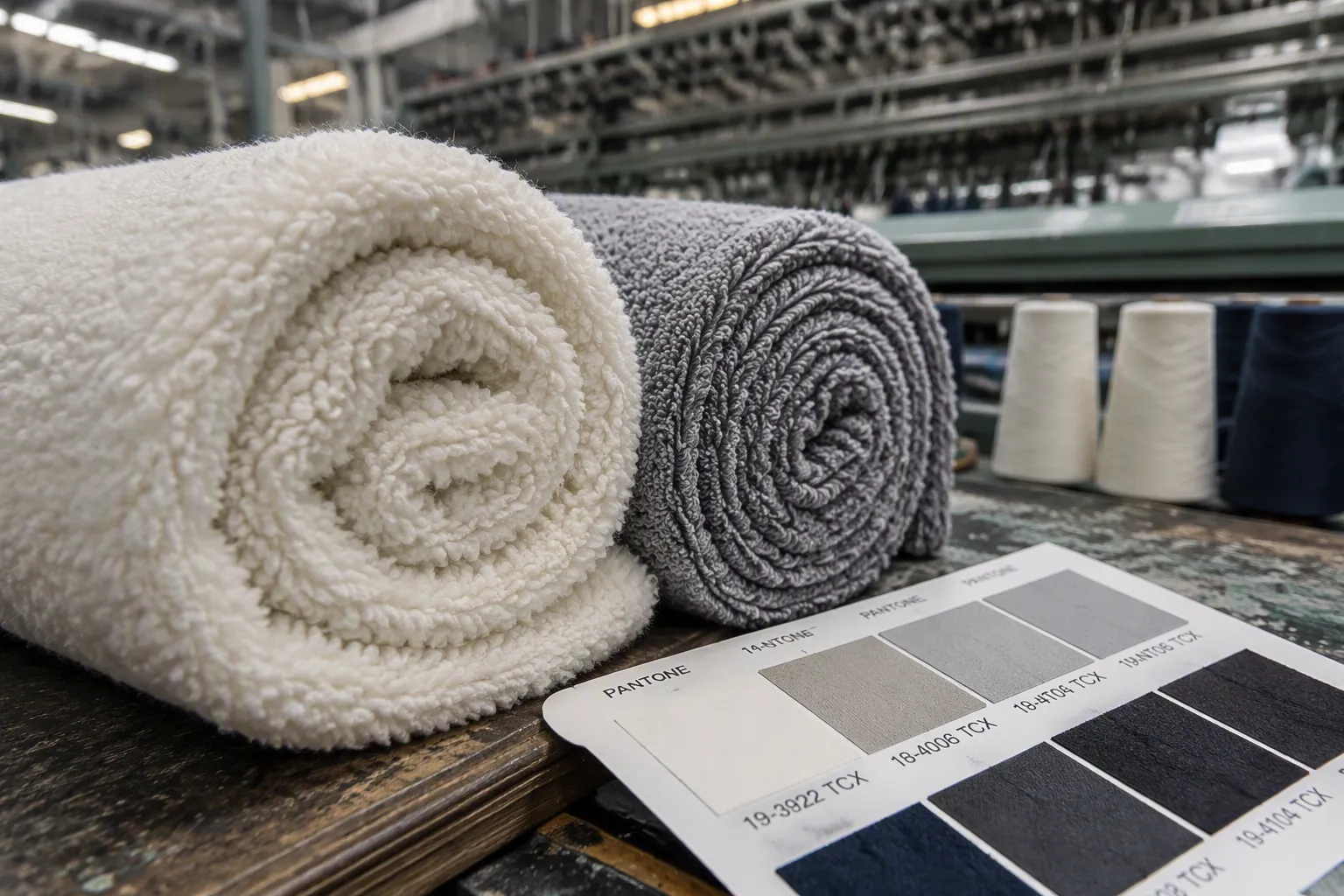
Color matching follows a careful process. Clients give Pantone codes or physical samples, and NBJM makes lab dips for approval before bulk dyeing. Reactive, pigment, and digital printing methods handle custom patterns and logos.
Texture options add more design choices. Brands pick between single-brushed, double-brushed, or unbrushed surfaces. Back-side options include loop-back French terry, light brushed back, or heavy brushed fleece. Custom knit structures range from 2-thread to 4-thread builds, slub terry, and mini or big loop variations. Functional finishes like anti-pilling, moisture-wicking, quick-dry, antimicrobial, UV resistance, and flame retardancy add performance value.
Quality-Focused Fabric Sourcing for Consistent Apparel Production
Consistency separates premium apparel from average products. NBJM keeps quality through a multi-stage production process.
| Production Stage | Quality Control Measure | Key Specification |
|---|---|---|
| Precision Knitting | Automated monitoring of loop formation and weight | Weight tolerance ±5%, widths up to 180cm |
| Expert Brushing | Controlled brushing with rotating metal bristles | Automated quality monitoring, custom gauge selection |
| Color Matching & Dyeing | Lab dip approval before bulk dyeing; reactive dye process | Minimum shade variation, single-lot consistency |
| Quality Finishing | Tenter frame processing; meter-by-meter inspection | Pre-shrunk to <5% residual shrinkage, width stabilization |
Local merchandisers help brands keep better quality control by watching production directly inside factories. They oversee fabric approvals, inline inspections, wash development, and measurements. Without physical oversight, the gap between approved samples and actual production can widen quickly.
Sustainability certifications add another layer of trust. GOTS certification requires at least 95% certified organic fibers and audits the entire supply chain for social and environmental criteria. GRS certification mandates at least 20% recycled material and ensures chain of custody from recycler to final garment.
NBJM works with over 30 factories worldwide, producing more than 10 million pieces each year. This network gives production flexibility and efficiency. Brands get samples within 7-14 days and complete mass production within 30 business days. With 24/7 support and guaranteed email responses within 8 hours, NBJM delivers the reliability that apparel brands need for consistent wholesale production.
The choice between fleece and terry comes down to climate and activity. Fleece delivers superior insulation for cold-weather wear. Its brushed surface traps heat effectively. Terry, especially French terry, offers breathability and absorbency for active or transitional settings.
Consider the environment first. Winter conditions demand fleece’s warmth. Mild or changing weather favors terry’s airflow. Consider the activity level too. High-energy movement requires moisture management that terry provides. Stationary comfort in cold spaces suits fleece best.
Both fabrics serve distinct purposes. Brands should match fabric to intended use. This difference between fleece and terry guides smart material selection.
For staying warm, choose fleece. For staying dry and comfortable, choose terry.
Frequently Asked Questions About Fleece and Terry Fabrics
How Does Fleece Differ from Terry in Warmth and Texture?
Fleece typically has a soft, brushed surface that provides greater warmth and insulation. Terry, including French terry, has looped yarns on the inner side, giving it a lighter and more breathable feel.
Is Fleece or Terry Better for Hoodies and Sweatshirts?
Both are suitable, depending on the intended use. Fleece is a strong choice for warm, heavyweight hoodies and sweatshirts, while French terry works well for lighter, more breathable styles and transitional seasons.
Which Fabric Is More Breathable and Moisture Absorbent?
French terry is generally more breathable and moisture-friendly because of its looped construction. Fleece provides better insulation but may retain more warmth during active wear.
Does Fleece or Terry Fabric Pill Less After Repeated Washing?
Pilling depends on fiber quality, yarn construction, finishing, and garment care, rather than fabric type alone. High-quality fleece and terry can both provide good resistance to pilling when properly manufactured and maintained.
Can Both Fleece and Terry Fabrics Be Used for Printing?
Yes. Both fabrics can support printing, but the surface texture and fabric construction should be considered when selecting the printing method. Sampling helps confirm print clarity, adhesion, and durability before bulk production.
Which Fabric Is Better for Lightweight and Transitional Apparel?
French terry is generally better suited to lightweight and transitional apparel because it offers breathability without the heavier insulation of brushed fleece. It is commonly used for lighter sweatshirts, hoodies, and casual layering pieces.