You hold a fleece sample labeled “300 GSM.” Your winter hoodie line needs the right weight. Is this fabric too heavy or too light? Apparel fabric weight measures mass per unit area. This number affects warmth, drape, durability, and cost for fleece and French terry apparel..
What do GSM and oz mean? How do you convert between them? How do you select the correct weight for your products? These questions have clear answers.
By the end of this guide, you will specify fabric weights with confidence. You will communicate these specifications to suppliers and customers without confusion. This knowledge transforms a simple label into a powerful tool for your brand.
Key Takeaways
- Fabric weight controls warmth, drape, durability, and cost.
- Use the formula OZ = GSM / 33.906 to change GSM into OZ.
- Use a cutter and a scale to measure GSM accurately.
- Choose fabric weight based on what your product is for and the season.
- Check the fabric weight using real samples before you start production.
What Is Apparel Fabric Weight and Why Does GSM Matter?
Apparel fabric weight tells you how much fabric weighs in a certain area. This one number shows how warm, heavy, and structured a garment will feel. For fleece and French terry items, fabric weight decides if a hoodie works for fall layering or stands alone in deep winter. It also changes cost, because heavier fabrics need more material for each garment. Knowing GSM and OZ helps you control these results.
Understanding GSM and OZ as Apparel Fabric Weight Measurements
Two measurement systems lead the clothing industry. GSM means grams per square meter. OZ means ounces per square yard. Both measure the same thing, but they use different units. European and Asian suppliers usually give GSM. North American brands often use OZ. You need to know both systems to buy fabric well.
The change between them uses a fixed formula. OZ = GSM / 33.906. For example, a 300 GSM fleece becomes about 8.85 oz/yd². This weight fits heavy hoodies that give strong warmth. On the other hand, 1 oz/yd² equals about 33.9 GSM. A light 150 GSM French terry becomes 4.42 oz, which works for breathable layering pieces.
The table below shows common changes for apparel fabric weight:
| GSM | OZ (oz/yd²) | Typical Use |
|---|---|---|
| 150 | 4.42 | Light French terry for layering |
| 200 | 5.90 | Mid-weight sweatshirts |
| 300 | 8.85 | Heavyweight fleece hoodies |
These reference points help you talk with suppliers no matter which unit system they prefer.
How to Measure Fabric GSM for Accurate Apparel Specifications
Measuring GSM needs a fabric sample, a circular cutter, and a digital scale. The process follows a standard method. First, lay the fabric flat on a cutting mat. Second, press the circular cutter into the fabric to get a precise sample. The cutter usually makes a circle with an area of 100 square centimeters. Third, weigh the sample on a digital scale set to grams. Fourth, multiply the weight by 100 to change from 100 cm² to 1 m². The answer is the GSM value.
For example, a 100 cm² sample that weighs 3 grams equals 300 GSM. This measuring method works for any fabric type, including fleece and French terry. Accuracy depends on good technique. The fabric must lie flat without stretching. The cutter must be sharp so it does not change the sample. The scale must be zeroed before each measurement.
You should measure several samples from different parts of the fabric roll. Fabric weight can change a little across the width and length. Take at least three samples and find the average. This practice gives you a reliable specification for your product.
Suppliers often give GSM values on their data sheets. You should check these numbers yourself. Ask for a physical sample and measure it on your own. This check protects your brand from getting fabric that does not match your needs. A simple measurement takes five minutes and stops costly production mistakes.
Lightweight, Midweight, and Heavyweight Fabric Categories
Fabric weight is commonly grouped into three broad categories, although the exact ranges vary by garment type and fabric construction.
- Lightweight: Generally below 200–250 GSM, suitable for breathable T-shirts, layering pieces, and warm-weather apparel.
- Midweight: Often around 200–350 GSM, offering a balance of comfort, coverage, and versatility for sweatshirts and everyday apparel.
- Heavyweight: Typically 350 GSM and above, providing greater structure, warmth, and a substantial feel for heavyweight hoodies, sweatshirts, and premium streetwear.
These categories are not strict industry standards. The same GSM can feel different depending on fiber composition, knitting method, brushing, and finishing. Brands should therefore evaluate GSM together with fabric construction and intended use rather than selecting fabric weight alone.
How to Convert Apparel Fabric Weight from GSM to OZ
Common GSM to OZ Conversions for Apparel Fabric Sourcing
The conversion formula gives you a number, but the key is choosing the right weight for your garment. For fleece and French terry, 300 GSM equals about 8.85 oz and provides warmth and structure, while 150–200 GSM equals 4.42–5.90 oz for lighter, more breathable garments.
French terry and fleece can feel different at the same weight. French terry has a smooth face and looped back, making it breathable and versatile for French terry sweatshirts, joggers, and activewear. A 220 GSM French terry works well for spring joggers or fall pullovers.
Fleece is brushed to create a soft, fuzzy surface that traps more air and provides greater insulation. As a result, 280 GSM fleece feels warmer than 280 GSM French terry. This makes it ideal for casual fleece hoodies, jackets, and sweatpants in colder weather.
For apparel fabric sourcing, use these ranges as a guide:
- 180–220 GSM: Activewear French terry
- 260–320 GSM: Casual fleece hoodies
- 320+ GSM: Heavy winter jackets
Share your target GSM with your supplier and request a physical sample to verify the fabric weight and feel.
NBJM has over 20 years of experience helping brands select the right fabric weight for different garments. We also manage factory communication and verify that fabrics meet your target GSM, helping save time and reduce sourcing mistakes.
Key Fabric Specifications Beyond GSM for Clothing Brands
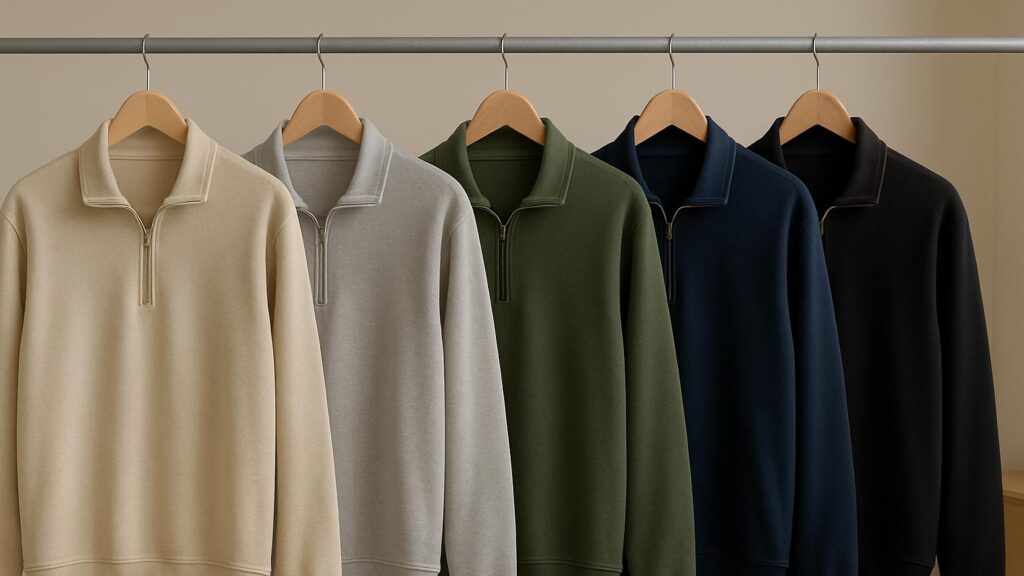
GSM is only one part of a fabric specification. Fiber composition, construction, thickness, width, stretch, recovery, and surface finish also influence how a fabric performs and feels. For clothing brands, evaluating these factors together helps ensure the selected fabric matches the garment’s design, target market, and production requirements.
Fabric Composition and Construction for Apparel Performance
Fabric composition determines many of its basic performance characteristics. Cotton can provide softness and breathability, polyester can improve durability and color retention, while elastane adds stretch and flexibility. Blended fabrics can combine these properties to meet specific product requirements.
Construction also affects performance. French terry has a smooth outer surface and looped inner surface, giving it a relatively breathable and versatile structure. Fleece is typically brushed to create a soft surface that improves warmth and insulation.
For brands, the choice between fleece, French terry, and different fiber blends should be based on the garment’s intended use rather than GSM alone. The same GSM can perform differently depending on its composition and construction.
Fabric Thickness, Width, Stretch, and Recovery Specifications
Fabric thickness and GSM are related but not identical. Two fabrics with the same GSM can have different thickness and volume because of their yarn structure, knitting method, or finishing. Thickness can affect warmth, drape, and the overall feel of a garment.
Fabric width is also important for production planning and material efficiency. Brands should confirm the usable fabric width before finalizing patterns and calculating consumption.
For stretch fabrics, both stretch percentage and recovery should be considered. Good recovery helps the fabric return to its original shape after movement, which is particularly important for joggers, fitted garments, cuffs, and other areas exposed to repeated stretching.
These specifications should be included in the fabric tech pack or product specification sheet to keep sourcing and bulk production consistent.
Fabric Hand Feel, Drape, and Surface Characteristics for Brands
Hand feel describes how the fabric feels when touched, including softness, smoothness, firmness, and density. Drape describes how the fabric falls and moves when worn. These qualities strongly influence the perceived value and appearance of finished apparel.
Surface characteristics also vary by fabric and finishing process. Brushed fleece has a soft, raised surface and warmer hand feel, while French terry generally has a smoother face with visible loops on the reverse. Other finishes can change softness, texture, appearance, or performance.
For premium apparel, brands should evaluate fabric samples by both specification and physical feel. A fabric may meet the required GSM while still producing the wrong drape or hand feel for the intended design.
NBJM supports custom fabric development for fleece and French terry, including composition, construction, weight, color, and finishing requirements. Working from approved samples and detailed specifications helps maintain consistency from product development through bulk production.
How to Choose Fabric Weight and Specs for Apparel Products

Choosing fabric weight starts with the garment’s intended use, but GSM should not be considered on its own. Brands should also evaluate fabric composition, construction, thickness, stretch, hand feel, and finishing. A complete specification helps ensure the fabric performs as expected and supports the desired product positioning.
Choosing GSM for T-Shirts, Hoodies, and Sweatshirts
Different garment types typically require different fabric weights. T-shirts generally use lighter fabrics for breathability and easy movement, while hoodies and sweatshirts use higher GSM for greater warmth and structure.
As a general starting point:
- T-shirts: Around 150–200 GSM for lightweight to premium everyday styles.
- Sweatshirts: Around 220–320 GSM depending on the season and construction.
- Hoodies: Around 240–500+ GSM, from lightweight everyday styles to heavyweight streetwear.
These ranges are not fixed standards. Fleece, French terry, cotton blends, and other constructions can feel very different at the same GSM. Brands should select the weight together with the fabric type and intended garment fit.
Matching Fabric Weight with Season, Design, and Brand Positioning
Climate and season are key factors in fabric selection. Lightweight fabrics work well for warm weather and layering, while heavier fabrics are better suited to cold-weather products.
Design also affects the ideal weight. Oversized and structured streetwear styles often benefit from heavier fabrics that maintain their silhouette. Relaxed or active designs may require lighter, more flexible materials for easier movement.
Brand positioning should be considered as well. Premium and heavyweight collections may use higher GSM to create a substantial hand feel, while everyday or entry-level products may prioritize versatility and cost efficiency. The right choice should support both the product concept and the customer’s expectations.
Balancing Fabric Performance, Production Cost, and Garment Quality
Higher GSM generally means more fabric material per garment, which can increase material and production costs. However, selecting a lower GSM simply to reduce cost can affect the garment’s structure, warmth, or perceived quality.
Brands should compare:
- Fabric weight and material consumption
- Fiber composition and durability
- Shrinkage and wash performance
- Softness, drape, and recovery
- Target wholesale and retail price
- Expected product lifespan
The goal is to find the best balance between performance, quality, and cost rather than choosing the highest or lowest GSM available.
Before bulk production, brands should approve a physical sample and confirm key specifications such as GSM, composition, measurements, color, and finishing. This reduces the risk of inconsistencies between the development sample and bulk order.
Considering Fabric Specs for Printing and Embroidery Applications
Decoration methods should also influence fabric selection. Stable, sufficiently structured fabrics generally provide a better base for detailed printing and embroidery, while very lightweight or highly stretchy fabrics may require additional support.
For printing, consider the fabric surface, smoothness, absorbency, and construction to achieve consistent results. For embroidery, fabric stability and recovery are especially important because stitching can create tension or distortion.
Brands should test the actual fabric with their intended decoration method before bulk production. This confirms that the print or embroidery maintains the desired appearance without compromising the garment’s hand feel or structure.
For custom apparel development, NBJM can help brands coordinate fabric weight, composition, construction, and finishing requirements with the final garment design. This allows the selected fabric to support both product performance and brand positioning.
Our Custom Apparel Fabric Solutions for Clothing Brands
NBJM provides custom apparel fabric and garment development services for clothing brands, with more than 20 years of manufacturing experience. We support brands in developing fleece, French terry, and other custom fabrics based on their target weight, composition, construction, color, and finishing requirements.
Custom Fabric Development for Different Apparel Collections
Different apparel collections require different fabric specifications. NBJM works with brands to develop materials based on the intended garment, target market, and design concept.
Custom options can include:
- Fabric Weight: Specify GSM or OZ based on the required garment feel and performance.
- Fiber Composition: Select cotton, polyester, elastane, recycled fibers, or blended constructions.
- Fabric Construction: Choose fleece, French terry, and other constructions for different levels of warmth, breathability, and structure.
- Color and Finishing: Match custom colors and finishing requirements to the brand’s design.
- Performance Specifications: Adjust stretch, recovery, softness, thickness, and other properties where required.
This approach allows brands to develop fabric specifications around the final product rather than adapting the design to an existing standard fabric.
Fabric Sampling and Specification Matching for Brands
Physical sampling helps brands evaluate the actual fabric before committing to bulk production. NBJM can develop samples according to the approved specifications so brands can review weight, texture, drape, stretch, color, and overall hand feel.
The development process typically includes:
- Specification Review: Confirm fabric weight, composition, construction, color, and finishing requirements.
- Fabric Sampling: Develop and provide a physical sample for evaluation.
- Testing and Feedback: Review the sample against the intended garment and make necessary adjustments.
- Specification Approval: Finalize the approved fabric details before bulk production.
Maintaining an approved sample and clear specification sheet helps reduce discrepancies between development and production.
Fabric Quality Control for Consistent Apparel Production
Consistent fabric quality is essential when producing apparel in bulk. NBJM checks key material and garment specifications throughout the production process to help maintain the approved standard.
Quality control can cover:
- GSM and Fabric Weight: Verify the fabric meets the approved weight specification.
- Composition: Confirm the agreed fiber blend and material requirements.
- Width and Dimensions: Check usable fabric width and dimensional consistency.
- Color and Surface: Inspect color matching, texture, and finishing.
- Garment Construction: Check measurements, stitching, seams, and finishing during production.
- Pre-Shipment Inspection: Review finished garments before order completion.
By combining custom development, physical sampling, and production quality control, NBJM helps clothing brands maintain consistent fabric specifications across their apparel collections.
Frequently Asked Questions About Apparel Fabric Weight and GSM
What Is the Difference Between GSM and OZ in Fabric Weight?
GSM measures fabric weight in grams per square meter, while OZ usually refers to ounces per square yard. Both indicate fabric weight, but the measurement systems differ. When comparing suppliers, make sure the quoted weight uses the same unit.
What GSM Is Best for T-Shirts, Hoodies, and Sweatshirts?
There is no single ideal GSM for every garment. T-shirts commonly use lighter weights around 120–220 GSM, while sweatshirts and hoodies generally use heavier fabrics around 250–500+ GSM. The best choice depends on the season, fit, fabric construction, and target market.
How Does Fabric GSM Affect Apparel Comfort and Durability?
GSM influences how substantial, warm, and structured a garment feels. Lower GSM fabrics are generally lighter and more breathable, while higher GSM fabrics tend to provide greater warmth and structure. However, durability also depends on fiber quality, construction, and finishing.
Is Higher GSM Always Better for Clothing Quality?
No. Higher GSM means more fabric weight, not automatically higher quality. A lightweight fabric can be better suited to a particular product than a heavyweight one. Fiber composition, knitting quality, finishing, and garment construction also determine overall performance.
Does Fabric Weight Affect Printing and Embroidery on Apparel?
Yes. Fabric weight and construction can influence how well a garment supports printing or embroidery. Heavier, more stable fabrics often provide a firm surface for detailed decoration, while lighter fabrics may require suitable techniques and backing to prevent distortion.
Does Fabric Composition Affect the Meaning of Fabric GSM?
GSM always describes the fabric’s weight per square meter, regardless of fiber composition. However, different fibers can produce different levels of softness, warmth, stretch, and durability at the same GSM. Therefore, GSM should be evaluated together with fiber content and fabric construction when selecting apparel materials.