Fleece is warmer and more durable. Cotton is more breathable and often more cost-effective for everyday wear and warm-weather clothing. That short answer settles the surface question. Is Fleece Better Than Cotton? The honest answer depends on how you plan to use the fabric.
This comparison looks at warmth, cost, and durability side by side. Each fabric has clear strengths. Fleece traps heat well and resists wear. Cotton feels soft against skin and handles print and embroidery with ease.
Climate matters here. Intended use matters too. A garment made for wearing follows different rules than one made for branding. Match the fabric to the job, and the choice becomes simple.
Key Takeaways
- Fleece keeps you warmer and lasts longer than cotton.
- Cotton breathes better and often costs less for everyday wear.
- Match the fabric to your climate and how you will use the garment.
- Choose a cotton-polyester blend for a balance of comfort and durability.
- Wash cold and avoid high heat to make any fabric last longer.
What Is the Difference Between Fleece Fabric and Cotton Fabric?
Fleece wins on warmth and durability. Cotton wins on breathability and next-to-skin comfort. That split verdict explains most fabric decisions before a single garment is cut. The two materials differ in origin, structure, and how they act against the body.
Why Fleece Describes a Fabric Structure Rather Than One Fiber Type
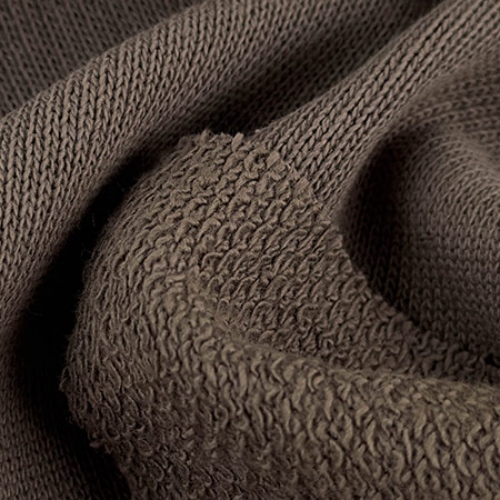
Fleece is a structure, not a fiber. The name describes a fabric with a raised, double-sided pile that traps air to keep you warm. Most fleece starts as polyester, a synthetic polymer. The pile itself comes from a mechanical step, not the raw material:
- Fibers are spun into yarn and knitted into a base fabric.
- Brushes or rollers lift surface fibers into a soft pile.
- The raised fibers form tiny air pockets that hold body heat.
- Dyeing and finishing come next, with optional anti-pill treatments.
That brushing step gives fleece its high warmth-to-weight ratio. A tightly woven fleece feels closer to cotton in your hand. A high-loft fleece feels thicker and keeps you warmer. Both share the same structural idea.
How Cotton, Polyester Fleece, and Cotton Fleece Differ in Composition
Cotton is a natural cellulose fiber. It breathes well, feels soft on skin, and takes print and embroidery easily. Cotton-poly blends add durability and reduce shrinkage, which makes them common in fleece apparel.
Polyester fleece composition varies by product:
- The base is polyester, a synthetic polymer made from terephthalic acid and ethylene glycol.
- The yarn may be partly or fully recycled, for example from soda bottles.
- Dyes and finishing agents join the raw material mix.
- Many fleece garments mix recycled and virgin polyester fibers.
Cotton fleece sits between the two. A controlled study compared 60/40, 80/20, and 100% cotton fleece with all other parameters held constant. The 80/20 cotton-polyester blend showed the most desirable thermal comfort. Wearers notice a shift in hand feel around 35–40% polyester content. An 80/20 blend reads as cotton with a structural safety net. A 65/35 blend stays cotton-led but dries faster. A 50/50 blend feels clearly smoother and more synthetic.
Neither fabric is always better. Fleece suits insulation and repeated wear. Cotton suits breathable everyday pieces and decoration-heavy designs. The right pick follows the climate and the job.
Fleece vs Cotton Warmth: Which Fabric Provides Better Insulation?
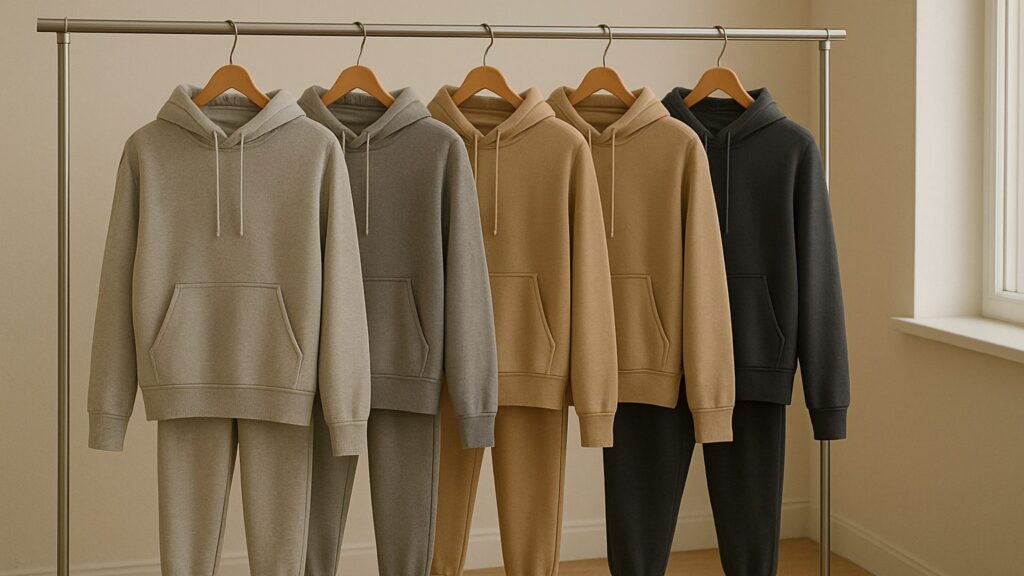
Warmth is where these two fabrics differ the most. Is Fleece Better Than Cotton? On this point, fleece comes out ahead. The reason is in the structure, not in the raw fiber.
How Fleece Traps Air to Retain Heat in Cold Weather Apparel
Single polyester fibers move heat faster than cotton fibers. Raw polyester has fiber conductivity of 0.14–0.20 W/m·K, while cotton is at 0.04–0.07 W/m·K. The finished fabric tells a different story. The brushed pile of fleece holds a lot of still air, and that trapped air stops heat from leaving. Finished polyester fleece drops to about 0.04 W/m·K. Standard cotton fabric measures about 0.06 W/m·K. A lower value means less body heat gets out, so fleece insulates better even though its fibers conduct heat faster.
Cotton works against itself here. Its flat, ribbon-like fibers pack together easily, so cotton traps less air than a thick pile of similar thickness. Moisture makes the gap even wider. Cotton pulls liquid water into its structure by capillary action. Once saturated, water pushes out the insulating air pockets. Water conducts heat much better than air, so a wet cotton garment pulls heat away from the body fast.
“Cotton fibers also have a relatively flat, ribbon-like structure, which is why cotton fabrics tend to be less effective insulators than wool of a similar weight.” Once saturated, the water in the cotton displaces the insulating air pockets, and a wet cotton garment will rapidly draw heat away from the body.
How Fabric Weight, GSM, and Construction Affect Warmth
Fabric weight, measured in grams per square meter (GSM), sets the warmth limit for both materials. Heavier fabric has more fiber mass and holds more air. Cotton fleece needs more weight to match polyester fleece. A 280 GSM cotton fleece hoodie and a 220 GSM polyester fleece hoodie give about the same insulation.
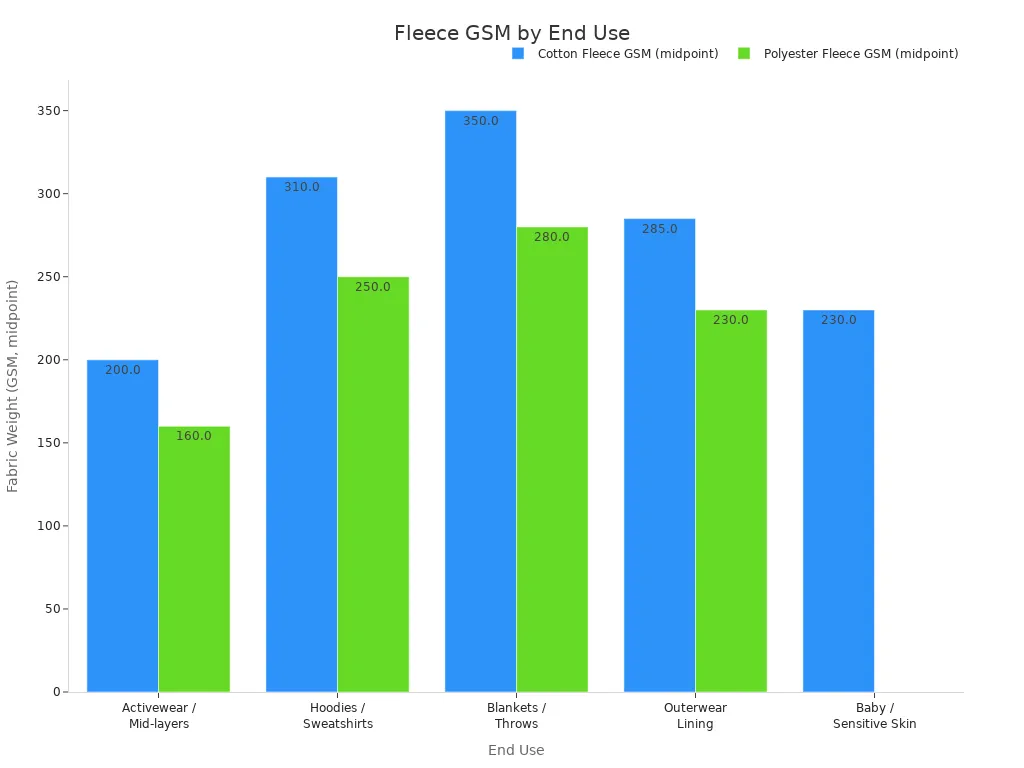
Typical GSM ranges by end use show the pattern. Activewear mid-layers run 180–220 GSM in cotton fleece and 140–180 GSM in polyester fleece. Hoodies and sweatshirts run 280–340 GSM in cotton fleece and 220–280 GSM in polyester fleece. A heavy winter fleece can reach 350+ GSM, while a training hoodie in French terry often sits at 250–300 GSM.
| Property | Cotton (Woven/Jersey) | Cotton Fleece | Polyester Fleece |
|---|---|---|---|
| Warmth | Low–moderate | Moderate–high | High (best warmth-to-weight) |
| Breathability | Excellent | Good | Low–moderate |
| Cost | Often lower at retail | Mid-range | Varies by volume and weight |
| Durability | Moderate; can shrink and pill | Good | High; holds shape well |
| Care | Wash cold, avoid high heat | Wash cold, avoid high heat | Wash cold, avoid high heat |
| Best use | Warm weather, printing | Everyday hoodies, mild cold | Cold weather, mid-layers |
Quick Verdict: fleece wins on warmth and durability. Cotton wins on breathability and print or embroidery friendliness. Cotton fleece sits between the two, pairing natural-fiber comfort with an insulating pile.
Breathability and Moisture Management in Fleece vs Cotton Clothing
Breathability sets these fabrics apart just as clearly as warmth does. Fleece’s double-sided pile traps air close to the body, so it gives strong warmth for its weight. That same structure also limits airflow. Cotton lets air and vapor move much more freely, so it works better for hot sleepers and warm weather.
How Cotton Absorbs Moisture Compared With Polyester Fleece
These two fabrics deal with sweat in opposite ways. Cotton absorbs liquid water into its fiber walls and can retain up to 25% of its weight in water. Polyester fleece repels water and moves moisture along its fiber surfaces instead of absorbing it, so it holds very little water. A 50/50 cotton-polyester blend comes in between the two.
| Fabric | Moisture Behavior |
|---|---|
| Cotton | Absorbs into fiber walls; retains up to 25% of its weight |
| Polyester | Repels water; moves moisture along fiber surfaces |
| Cotton-polyester (50/50) | Between the two |
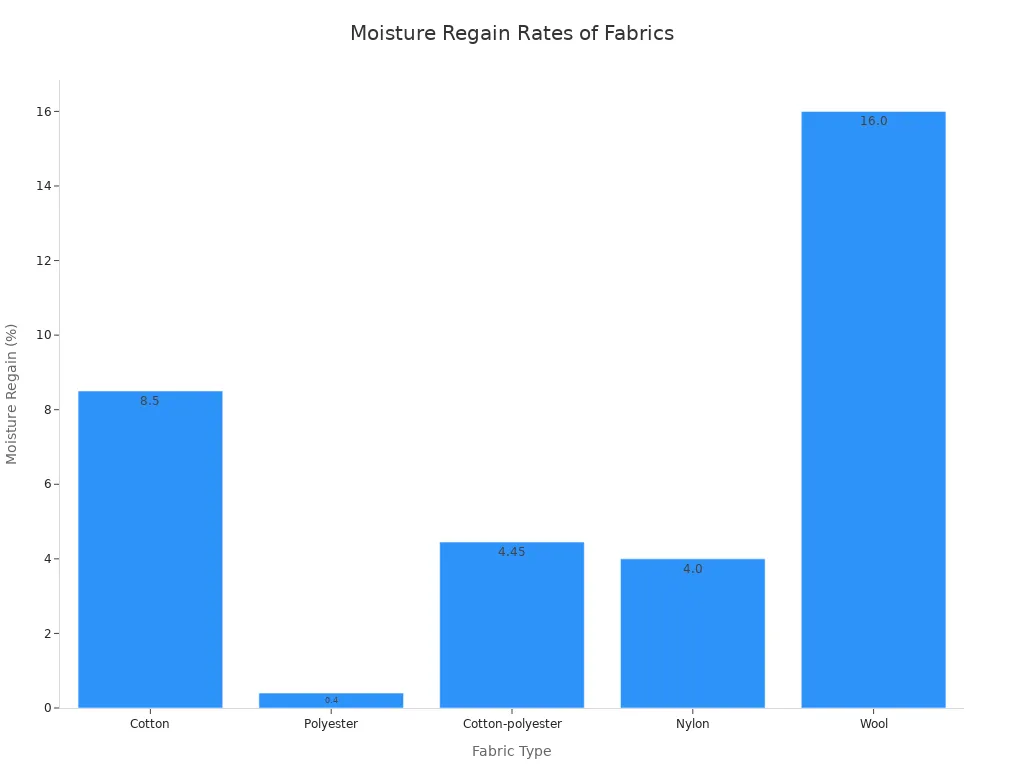
This gap shapes how each garment feels while you move. Cotton pulls liquid sweat into its fibers and holds it there. Polyester fleece sheds water and wicks moisture away from the skin. Cotton fleece falls between pure cotton and polyester fleece on warmth, and its blend ratio also narrows the moisture gap.
Why Wet Fabric Performance Matters for Comfort and Outdoor Use
A wet garment changes how your body controls its temperature. Soaked cotton gets heavy, and sweat cannot evaporate from it. Cooling then stalls in heat, and you can overheat. In cool weather, wet cotton stays against the skin and causes too much heat loss, which leads to chills after exercise.
Synthetic materials like fleece shed water well and can hold in warmth, and they also dry fast when damp. The air-pocket design helps wick moisture away from the skin, which helps the wearer feel warm and dry.
Fleece acts differently when damp. It barely picks up weight, dries fast, and keeps its insulating air pockets working. Evaporation keeps going, so the body’s cooling system works in heat and stays steady in cold. For outdoor layering, that dependability matters more than softness alone.
Fleece vs Cotton Durability: Shrinkage, Pilling, and Wear Resistance
Durability decides how long a garment keeps its shape and looks. Here the two fabrics go different ways, and the gap appears fastest after the first few washes.
How Repeated Washing Affects Cotton and Fleece Fabric Performance
Cotton changes during washing. Regular cotton jersey and French terry shrink about 5–10% in normal home washing. Pre-shrunk, sanforized cotton keeps that loss to roughly 2–3%. Cotton-based fleece falls in the same 5–10% range as regular cotton jersey. Polyester fleece resists shrinkage well and keeps its shape through repeated cycles.
| Fabric Type | Typical Shrinkage Rate |
|---|---|
| Pre-shrunk / sanforized cotton | 2–3% |
| Regular cotton, cotton jersey, French terry | 5–10% |
| Cotton-based fleece | 5–10% |
Pre-shrunk cotton often costs more at retail for basic tees and hoodies. That extra cost buys sizing you can count on. Polyester fleece can win on cost at scale for bulk production, since less shrinkage means fewer size complaints later on.
How Pilling, Surface Abrasion, and Shape Retention Affect Garment Life
Pilling starts when loose fibers rub together and roll into small balls. Pure cotton generally pills less than blended fabrics because its fibers are smoother and less prone to tangling, though lower-quality cotton with shorter fibers pills more. Polyester fleece is reported to pill after extended wear or frequent washing, so its resistance is limited under repeated laundering; anti-pill finishes help. Surface rubbing wears cotton thin at cuffs and elbows. Fleece holds up longer in high-friction spots.
Shape retention favors fleece. Knit cotton can stretch at the neckline and hem. Fleece keeps its structure through wash cycles. Several factors drive the final result: fiber type, weight in GSM, blend ratio, order volume, and decoration method. Heavier fabric lasts longer in both cases. A cotton-poly blend balances cotton’s breathability with polyester’s durability and reduced shrinkage. Care habits matter too. Wash cold, avoid high heat, and follow the label to extend life for either fabric. Is Fleece Better Than Cotton? On durability, fleece holds the edge.
Fleece vs Cotton Cost: Fabric Prices and Apparel Production Expenses
Cost is the one area where the answer changes based on who is buying. Cotton basics often cost less in stores. Polyester fleece can cost less per unit when bought in large amounts. Is Fleece Better Than Cotton? If you look at price alone, neither fabric wins in every case.
How Fiber Composition and Fabric Weight Influence Wholesale Fabric Costs
The fiber you choose sets the starting price of a fabric. Cotton prices rise and fall with the crop season, so they change from year to year. Polyester prices follow the oil and chemical markets and usually stay more steady. Recycled polyester often costs more than new polyester, which makes eco-friendly fleece lines more expensive.
Fabric weight adds a second cost. A 340 GSM cotton fleece hoodie uses much more fiber than a 220 GSM polyester fleece hoodie, and that extra material raises the fabric bill. The blend ratio matters too. An 80/20 cotton-polyester blend costs more than a 50/50 blend, because cotton has the higher fiber price. Order size and decoration method also play a part. Bigger runs spread setup costs across more units, and complex decoration adds labor to each piece.
How Cutting Yield, Fabric Consumption, and Defects Affect Garment Costs
Cutting yield measures how much of a fabric roll turns into garment panels. The formula is simple: yield = good units / total units x 100. Fleece resists shrinking, so its panels keep their cut size through washing and finishing. Cotton can shrink and pill over time, and that shrinkage forces factories to cut panels a little larger, which lowers yield.
Defects raise cost in both fabrics. Size complaints from shrinkage, pilling claims, and stretched necklines all add rework or replacement costs. Cotton-poly blends combine cotton’s breathability with polyester’s durability and less shrinkage, so they often give the most predictable cost per wear. Care habits protect that investment. Wash cold, avoid high heat, and follow label instructions to extend the life of both fabrics.
Which Fabric Works Best for Hoodies, Sweatshirts, and Joggers?
The best fabric for a hoodie or a pair of joggers depends on the weather and the job. Cold-weather collections lean toward fleece. Mild climates and activewear lean toward cotton and French terry.
When Fleece Is Better for Warm Hoodies and Cold-Weather Collections
Brushed fleece is the stronger pick for cold-weather hoodies and sweatshirts. Its sweatshirt knit has inner loops that are brushed by machine, and that fluffy surface traps more air than a flat knit. French terry uses an open loop-back structure and gives less warmth. For autumn and winter lines, brushed fleece is the more common choice.
| Fabric | Structure | Warmth | Best Use |
|---|---|---|---|
| Brushed fleece | Sweatshirt knit with brushed inner loops | Higher — extra loft traps more air | Autumn/winter collections, cold-weather hoodies |
| French Terry | Breathable loop-back structure | Lower | Everyday premium hoodies |
Weight sets the warmth level within fleece. Lighter fleece runs 280–320 GSM. Premium winter hoodies sit at 320–380 GSM. Heavyweight streetwear reaches 380–450+ GSM. A 320–400 GSM fleece balances warmth, structure, and comfort for a premium winter hoodie. Sponge fleece and cross-grain knit fleece are useful variants; the cross-grain knit reduces shrinkage and holds shape.
When Cotton and French Terry Suit Breathable Everyday Apparel
French terry suits mild climates and days full of movement. Its uncut loops create air circulation and let airflow pass through the fabric. That structure prevents overheating during activity, and fleece can run too warm for the same use.
Fleece provides superior thermal insulation by trapping dead air within its brushed pile, whereas French Terry offers high breathability and moisture absorption through its open loop structure.
Decoration guides the choice as well. Cotton hoodies and tees are ideal for printing and customization. Embroidery works well on both fabrics, and fleece offers a stable, structured surface for stitched logos. NBJM offers both custom fleece and French terry apparel with 100% customizable designs, so clients can choose the fabric that fits their climate and decoration needs.
Our Custom Fleece and French Terry Manufacturing Support for Brands
NBJM manufactures custom fleece and French terry apparel for brands, backed by over 20 years of industry experience and a network of 30+ partner factories.
How NBJM Supports Fabric Selection, GSM Customization, and Sampling
NBJM helps brands select fabrics based on garment use, GSM, softness, durability, and pilling resistance. Options include lightweight microfleece, warm Sherpa, and recycled or certified materials where available. Physical samples allow clients to confirm fabric feel, weight, color, and decoration before bulk production.
How Production Quality Control Helps Protect Bulk Order Consistency
NBJM conducts quality checks from material inspection to final packing, covering fabric weight and shade, cutting accuracy, printing and embroidery, stitching, measurements, and labeling. For fleece hoodies, particular attention goes to shrinkage, hood shape, rib recovery, and print placement. Approved samples and clear tech packs help maintain consistency across bulk orders.
Frequently Asked Questions About Fleece vs Cotton Fabric
Is Fleece Warmer Than Cotton for Hoodies and Sweatshirts?
Generally, brushed fleece is warmer than regular cotton fabric because its soft inner pile traps air and helps retain heat. Cotton offers better breathability for everyday wear, while fleece suits cold-weather hoodies and sweatshirts. The warmth also depends on fabric GSM and fiber composition.
Does Fleece Shrink More or Less Than Cotton After Washing?
Polyester fleece usually shrinks less than 100% cotton, while cotton-rich fleece can still shrink after washing. Pre-shrinking, fabric composition, and washing temperature all affect dimensional stability. For wholesale apparel production, test the selected fabric before bulk manufacturing to help control shrinkage.
Which Fabric Is Cheaper for Wholesale Apparel Production?
Wholesale fleece vs cotton fabric costs depend on fiber composition, GSM, finishing, order volume, and customization. Polyester fleece may be more economical for some warm apparel programs, while cotton prices vary with yarn quality and fabric construction. Compare the cost of the finished garment rather than fabric price alone.
Is Cotton or Fleece More Durable for Everyday Clothing?
Both fabrics can be durable when made with suitable yarns and construction. Cotton provides breathable comfort but may shrink or fade with repeated washing. Fleece offers warmth and comfort, although brushed surfaces can pill with friction. Fabric quality, finishing, care, and garment construction all influence long-term performance.