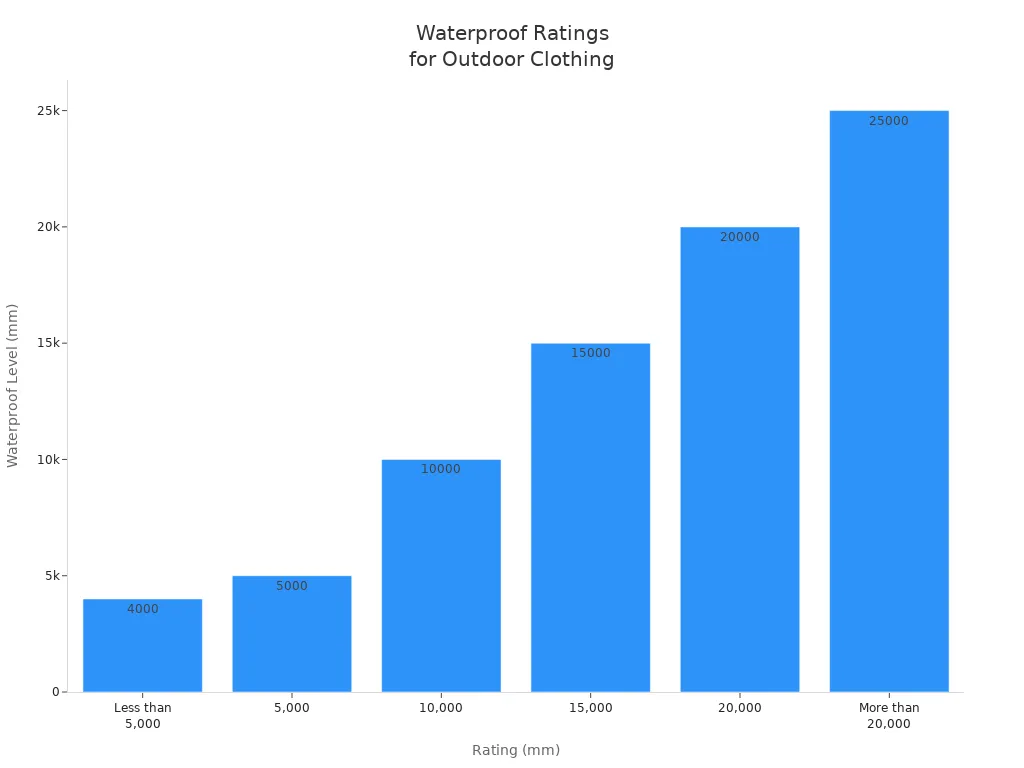
If you’re wondering if fleece jackets keep you dry in the rain, here’s the short answer: they are not waterproof, but some versions offer water resistance. Let’s break down the difference. A waterproof jacket blocks out all water, even in heavy rain, while water-resistant jackets only protect you from light rain or splashes. Here’s a quick look at how outdoor brands rate water protection:
| Rating (mm) | Description |
|---|---|
| Less than 5,000 | Repels water, no resistance to light water exposure. |
| 5,000 | Water-resistant; stands up to light rain and dry snow. |
| 10,000 | Somewhat waterproof; stands up to moderate rain and average snow. |
| 15,000 | Waterproof; stands up to moderate rain and snow under pressure. |
| 20,000 | Very waterproof; handles heavy rain and wet snow. |
| More than 20,000 | Super waterproof, but less breathable. |
Why does this matter? If you wear fleece in a downpour, you’ll get wet. For heavy rain, you need a true waterproof layer. Fleece works best for light rain or as a cozy layer in dry weather.
Key Takeaways
- Fleece jackets are not waterproof. They can handle light rain. But they will get wet in heavy rain.
- Jackets with DWR coatings resist water better. These coatings make water bead up and roll off.
- Microfleece is not waterproof. It works best under a waterproof layer. This gives you more warmth and protection.
- Wearing fleece under a waterproof jacket keeps you warm and dry. This helps during outdoor activities.
- Take care of your fleece jacket to keep it water resistant. Wash it with special soap. Reapply DWR treatments when needed.
Is a Fleece Jacket Waterproof
Fleece Fabric Properties
When you pick up a fleece jacket, it feels soft and light. Fleece fabric is made from synthetic fibers like polyethylene terephthalate. These fibers trap air to keep you warm. Fleece jackets dry fast and feel good for outdoor fun. Some jackets use hardface or techface fabrics. These make the jacket stronger and help with weather resistance. Some fleece jackets use recycled materials. This helps the environment.
Waterproof vs Water Resistant
You might think a fleece jacket keeps you dry in rain. The truth is, fleece jackets are not waterproof. They do not block water like a raincoat. Some fleece jackets have water resistance. This means they can handle light rain or splashes. Many brands add a DWR coating to the outside. This helps water bead up and roll off. But if you stand in heavy rain, the jacket will get wet.
Tip: If you want water resistance, look for jackets with Teflon coatings or special treatments. These help protect you but do not make the jacket waterproof.
Microfleece Waterproof Myths
Some people say microfleece is waterproof. This is not true. Microfleece is not waterproof. It has some water resistance because of its tight weave. It cannot handle heavy rain. Microfleece works well under a waterproof shell. When microfleece gets wet, it does not keep you warm. The water resistance only works for light moisture. Microfleece jackets are best for dry weather or as a middle layer.
- Microfleece is not waterproof; it only resists light moisture.
- The fabric absorbs water when it gets very wet.
- Microfleece works best under a waterproof jacket in bad weather.
DWR Coatings for Fleece Jack
Many fleece jackets use DWR coatings for water resistance. These coatings help water slide off the jacket. DWR can wear out over time. When this happens, your jacket will not protect you as well. Here are some limits of DWR coatings:
| Limitation | Description |
|---|---|
| Breathability | Old DWR makes it harder for moisture to escape. |
| Moisture Management | The fabric gets soaked when DWR wears off, so it does not work as well. |
To keep your fleece jacket working well, reapply water-repellent treatments after washing. This helps keep water out and makes you comfortable outdoors.
Fleece Jackets vs Other Outerwear
Fleece vs Rain Jackets
You might ask how a fleece jacket compares to a rain jacket. Fleece keeps you warm and feels soft. It does not stop water from getting in. Rain jackets are made to keep water out. If you wear fleece in heavy rain, you will get wet. Rain jackets use special materials to block water. This keeps you dry even in strong rain. Fleece jackets let air move through the fabric. This helps you stay comfortable when you are active outside. Rain jackets do not let air move as well. But rain jackets are better for water resistance and weather protection.
Tip: If rain is coming, wear a rain jacket. Put your fleece jacket under it for extra warmth.
Here is a simple chart to show how fleece jackets and rain jackets are different:
| Feature | Fleece Jacket | Rain Jacket |
|---|---|---|
| Water Resistance | Light rain only | Heavy rain, waterproof |
| Breathability | Excellent | Moderate |
| Drying Time | Slow after soaking | Fast |
| Warmth | Good | Varies |
Fleece vs Softshells
Softshell jackets give you warmth and some water resistance. They protect you better than fleece jackets, but not as much as rain jackets. Softshells use tightly woven fabrics and sometimes have a DWR coating. Fleece jackets are lighter and softer. Softshells block wind and light rain better than fleece. Microfleece is good for layering under a softshell. If you want comfort and some protection, wear microfleece with a softshell on your next trip.
- Microfleece is great as a base or middle layer.
- Softshells resist water better than fleece jackets.
- Fleece takes longer to dry than softshells when wet.
When to Wear Fleece
Wear a fleece jacket when the weather is cool and dry. Microfleece is good for cold mornings or evenings. If there is light rain or mist, a fleece jacket with water resistance can help for a short time. Fleece keeps you warm and lets your body breathe during outdoor activities like hiking or camping. In cold weather, wear microfleece under a waterproof shell for the best protection. Fleece jackets work best in dry weather. They do not do well in heavy rain. If you want to stay dry, choose a waterproof jacket.
Note: Microfleece is great for outdoor clothes when you need warmth and breathability, but not full waterproof protection.
Tips for Wet Conditions
Layering with Fleece
When it is wet outside, layering helps a lot. Start with microfleece as your first or middle layer. Microfleece is light and keeps you warm. Experts say to wear microfleece with a shell layer. This keeps out wind and some water. Wind fleece is another choice. It has a special layer inside that blocks wind. This gives you more protection from bad weather.
Here’s how layering keeps you comfortable:
| Aspect | Description |
|---|---|
| Insulation | Microfleece holds heat close to your body. This gives you great insulation. |
| Moisture Transport | Fleece lets sweat move out to the next layer. This helps you stay warm and dry. |
| Breathability | Microfleece lets air move through. This is good for outdoor fun in wet weather. |
If you think it will rain a lot, add a strong outer layer. Most outer layers have a water-repellent finish. They also let sweat escape. You get warmth, air flow, and some water resistance together.
Caring for Water Resistance
You want your fleece jacket to work well for a long time. Taking care of water resistance is simple if you follow some steps. Always empty the pockets before you wash your fleece jacket. Look at the care label for washing tips. Use Nikwax Tech Wash instead of normal soap. This keeps the water-repellent finish strong. After washing, use Nikwax Polar Proof to help water resistance. Dry your fleece jacket the way the label says.
Here’s a quick care checklist:
- Clean stains with soap and water.
- Wash gently with cool water and mild soap, or hand wash with cold water.
- Do not use fabric softener or bleach.
- Hang to dry or use a dryer with no heat.
Put on DWR coatings every 3 to 6 months. If you wash your fleece jacket a lot, you may need to do this more often. Good care keeps your microfleece ready for any weather.
Note: DWR treatments are now better for the environment. Brands use shorter-chain chemicals. Some are trying options with no fluorocarbons for outdoor clothes.
Alternatives for Heavy Rain
Fleece jackets are good for light rain, but not heavy rain. For strong rain, pick a packable waterproof jacket with a Primaloft puff jacket. This feels lighter and less bulky than fleece. A Goretex shell with a big hood, a down vest, and a thin microfleece hoodie give you warmth and protection. For changing weather, try a packable raincoat, a thin zip-up jacket, and a packable down jacket. A light waterproof jacket with a lining feels nicer than one without.
If you want to stay dry in cold weather, wear microfleece under an insulated jacket or waterproof shell. You get warmth, water resistance, and comfort for any outdoor trip.
You know fleece jackets do not keep out all water. Some fleece jackets can handle light rain. Think about the weather before you pick a fleece jacket. Fleece keeps you warm and lets air move. Microfleece will soak up water if you stay out in rain too long. For heavy rain, wear a waterproof shell like Gore-Tex. It is smart to wear microfleece under a waterproof jacket. People like fleece because it feels soft and is light. It also lets your body breathe. Keep your fleece jacket clean. Put on water resistance treatments to help it work well.
- Pick microfleece for warmth and air flow.
- Wear a waterproof jacket when rain is strong.
- Layer fleece jackets for comfort outside.
Tip: The right fleece jacket makes trips outside feel nice. Water resistance does not last forever. Take care of your microfleece so you can use it for every adventure.
FAQ
Can you wear a fleece jacket in the rain?
You can wear a fleece jacket in light rain. It keeps you warm and dries fast. If the rain gets heavy, you will get wet. For strong rain, grab a waterproof layer.
Is microfleece good for outdoor activities?
Microfleece works great for outdoor fun. It feels soft and light. You get warmth without bulk. Microfleece lets sweat escape, so you stay comfortable when you hike or camp.
How do you make your fleece jacket more water resistant?
You can spray your fleece jacket with a DWR treatment. This helps water roll off the surface. Wash your fleece with special soap. Reapply the coating every few months for best results.
What is the difference between fleece and microfleece?
| Feature | Fleece | Microfleece |
|---|---|---|
| Thickness | Thicker | Thinner |
| Warmth | Very warm | Warm |
| Weight | Heavier | Lighter |
| Use | Everyday wear | Layering, outdoor |
Can you layer microfleece with other outdoor gear?
Yes, you can layer microfleece under a waterproof shell or vest. This gives you warmth and protection. Microfleece works well with other outdoor clothes. You stay dry and cozy on your adventures.
Tip: Layering fleece and microfleece helps you adjust to changing weather when you go outside.