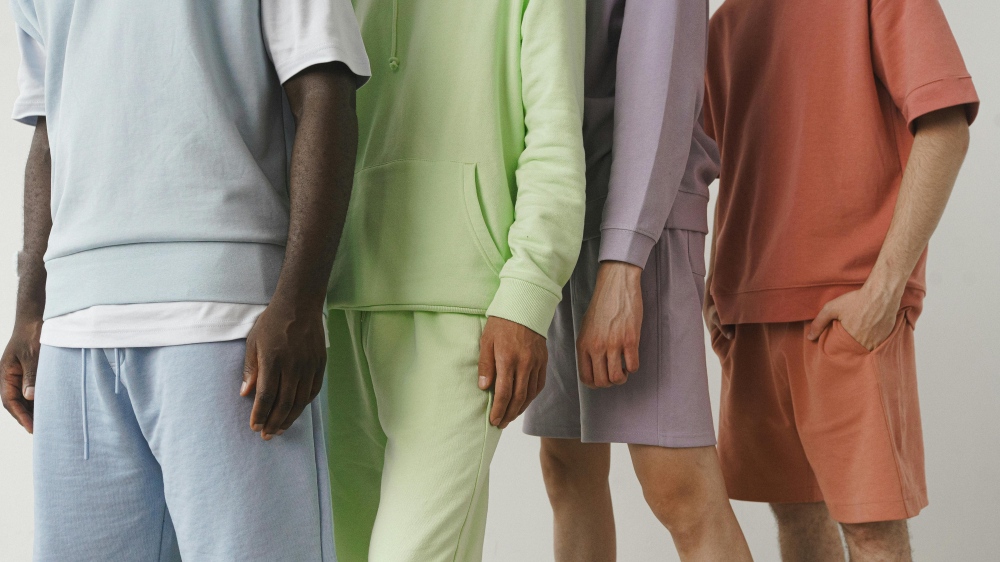
Fleece jackets are made from different materials like polyester, cotton blends, bamboo, and hemp. Polyester fleece is light and keeps sweat away from your skin. Cotton blends let air pass through and feel soft. Some jackets use bamboo or hemp to help the environment. Each material changes how warm, comfy, stretchy, and earth-friendly the jacket is.
- Polyester fleece is light, dries fast, and lasts long.
- Coral fleece is softer and warmer, so it is good for cold days.
- Recycled polyester helps the earth by using less plastic and making less pollution.
Pick the fleece that fits your need for warmth, comfort, and caring for nature.
Key Takeaways
- Fleece jackets use materials like polyester, cotton, bamboo, and hemp. Each material changes how warm and comfy the jacket is. It also affects the planet in different ways.
- Polyester fleece is light and dries fast. It lasts a long time. It works well in cold weather. It is good for outdoor fun.
- Bamboo fleece feels soft and is good for the earth. It helps keep your body at a nice temperature. It is great for people with sensitive skin.
- Hemp fleece is strong and kind to nature. It needs less water and fewer chemicals to grow. This makes it a smart choice for the environment.
- Pick your fleece based on what you need. Think about warmth, comfort, and helping the planet. Also, think about what you will do and the weather outside.
Main Materials Used in Fleece Jackets

Fleece jackets are made from different materials. Each material has special features and benefits. The type of material changes how warm, comfy, and strong the jacket is. It also affects how it impacts the planet. Some materials are made by people. Others come from nature. Below, you will learn about the most common materials in fleece jackets. You will see how they are different.
Polyester (PET) Fleece
Polyester is the main material in most fleece jackets. This man-made fiber is used a lot because it has many good points. Polyester fleece is light and keeps you warm. The fuzzy part holds air, so it keeps heat in, even if wet. Polyester fleece does not soak up water. It dries fast and helps you stay comfy when it is damp. The fabric does not pill or fray easily. This makes it last longer, even after many washes. Polyester fleece is cheaper to make than natural fleece.
Tip: Polyester fleece works well for midweight and heavyweight fleece jackets. It is great for cold weather and outdoor fun.
Key properties of polyester fleece:
- Warmth: Brushed fibers hold heat inside.
- Moisture repellency: Dries quickly and moves sweat away.
- Lightweight: Feels good without being heavy.
- Durability: Does not wear out or shrink easily.
- Cost-effectiveness: Costs less than other fleece types.
Cotton and Cotton Blend Fleece
Cotton fleece and cotton blend fleece are liked for their soft feel and breathability. Cotton is a natural fiber. It is comfy and soaks up sweat. Pure cotton fleece keeps you warm but loses heat when wet. It soaks up water. Cotton blends mix cotton with man-made fibers like polyester or spandex. These blends are stronger and do not shrink or pill as much. They also help move sweat away, keeping you cool and dry. Cotton blend fleece is good for lighter jackets and sports clothes.
| Property | Cotton Fleece | Polyester Fleece |
|---|---|---|
| Warmth | Good insulation, loses warmth if wet | Excellent warmth-to-weight, traps air even if damp |
| Breathability | Highly breathable, absorbs moisture | Less breathable, wicks and dries fast |
| Durability | Can shrink or pill if not pre-washed | Very durable, resists wear and shrinking |
Cotton blends last longer than pure cotton. They mix cotton’s softness with the strength of man-made fibers.
Bamboo Fleece
Bamboo fleece is special among natural fleece fabrics. It is good for the planet and feels nice. Bamboo fleece is very soft and gentle on skin. It is great for people with sensitive skin. The fabric soaks up sweat fast. It keeps you dry and comfy. Bamboo fleece helps keep your body temperature steady. It lets air move through, so you do not get too hot. Bamboo fleece is made from bamboo and organic cotton. It is earth-friendly and breaks down over time.
| Property | Description |
|---|---|
| Softness | Gentle on skin, ideal for sensitive skin |
| Moisture-wicking ability | Absorbs moisture quickly |
| Temperature regulation | Maintains stable body temperature |
| Breathability | Allows air circulation, comfortable in summer |
| Eco-friendliness | Sustainable and biodegradable |
Making bamboo fleece uses less water and energy than cotton or polyester. Bamboo takes in more CO₂ and gives off more oxygen than cotton. Bamboo grows fast and does not need much to grow. This makes bamboo fleece a smart choice for fleece jackets.
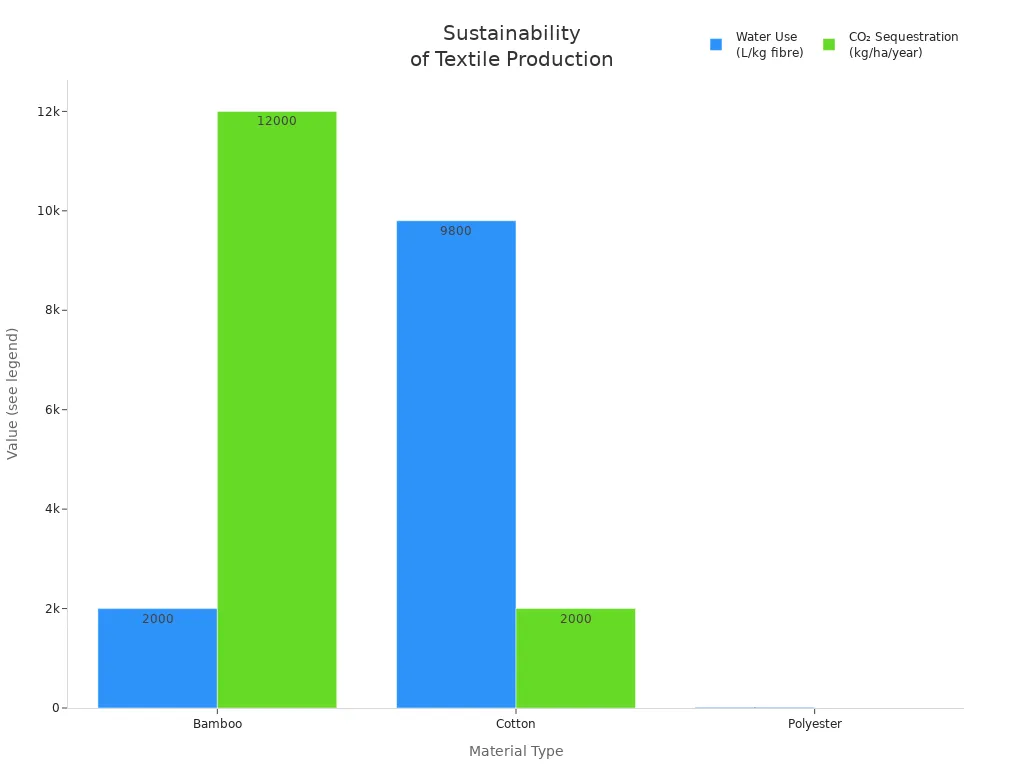
Bamboo needs 40–60% less energy and water than polyester. Bamboo also helps soil and brings life back to damaged land.
Hemp Fleece
Hemp fleece is another natural choice for fleece jackets. Growing hemp uses less water and makes less pollution. Hemp breaks down in nature, so it is better for the earth. Hemp does not need many chemicals to grow. It grows quickly and its roots help keep soil in place. Hemp fleece helps clean soil and adds good things back to it.
- Hemp fleece is good for the planet.
- It lasts a long time and does not wear out fast.
- Hemp fleece is great for people who want natural fleece with little harm to nature.
Spandex Blend Fleece
Spandex blend fleece mixes man-made fibers with spandex. This makes the jacket stretch and fit better. A little spandex helps the jacket hug your body. This keeps you warmer without making the jacket heavy. These blends are used in sports clothes and fleece for moving around. Spandex blend fleece lasts long and keeps its shape after many washes.
Spandex blend fleece is best for sports and activities. It fits close and lets you move easily.
Overview of Synthetic and Natural Materials
- Synthetic: Polyester and spandex blend fleece are man-made fleece fabrics. They last long, move sweat away, and cost less.
- Natural: Cotton, bamboo, and hemp fleece are natural fleece fabrics. They are soft, let air through, and are good for the planet.
- Blends: Cotton blend fleece and spandex blend fleece mix the best parts of both types. They make fleece jackets for many uses.
Fleece jackets come in many styles and materials. Knowing about the different fleece fabrics helps you pick the right jacket. You can choose midweight fleece for daily wear or heavyweight fleece for outdoor trips. Learning about synthetic and natural fleece helps you find the best jacket for warmth, comfort, and caring for nature.
Types of Fleece Fabrics and Their Properties
Fleece jackets are made with different fleece fabrics. Each type has its own features. These features change how warm, comfy, and useful the jacket is. The main types are polar fleece, microfleece, sherpa fleece, and jersey fleece.
Polar Fleece
Polar fleece is a top pick for jackets. It is made mostly from polyester. This fiber helps keep heat in. The thick fabric traps air and keeps you warm. Special steps make the fabric soft and fluffy. Polar fleece comes in different thicknesses, like 100, 200, and 300 gsm. Thicker polar fleece gives more warmth. It is good for cold weather.
| Characteristic | Effect on Jacket Performance |
|---|---|
| Lightweight | Makes it easy to move and wear |
| Warmth | Keeps you warm by trapping heat |
| Softness | Feels nice and soft on your skin |
| Variants (100, 200, 300 gsm) | Thicker fleece is warmer, good for cold days |
Polar fleece is thicker than microfleece. It keeps you warmer and is best for winter clothes.
Microfleece
Microfleece is thinner and lighter than polar fleece. It lets air move through and pulls sweat away. Microfleece keeps you dry and comfy. Thin fibers help air flow and stop you from getting too hot.
- Microfleece is light, so you can wear layers.
- It moves sweat away from your skin.
- Air passes through easily, so it does not feel stuffy.
Microfleece lets more air in than polar fleece. It is good for layering or wearing when it is not too cold.
| Fleece Type | Thickness | Insulation Properties | Best Use |
|---|---|---|---|
| Polar Fleece | Thicker | Very warm | Best for winter clothes |
| Microfleece | Thinner | Warm enough | Good for layers or mild days |
Sherpa Fleece
Sherpa fleece is known for its soft, fluffy feel. It looks and feels like wool. Sherpa fleece has a bumpy surface. These bumps trap air and keep you warm. The soft feel makes it nice to wear for a long time.
- Sherpa fleece is fluffy and soft.
- The bumpy texture helps keep you warm.
- It feels like sheep’s wool, so it is good for cold weather.
Sherpa fleece needs gentle care to stay fluffy. Wash it in cool water with mild soap. Do not use hot dryers or fabric softeners.
Jersey Fleece
Jersey fleece is light and stretches easily. It feels soft and is good for casual clothes. Jersey fleece does not keep you as warm as other types. But it lets air move through, so it is good for warm weather.
- Jersey fleece lets air flow and keeps you cool.
- It stretches, so it is comfy for daily wear.
- It works best for light hoodies and casual jackets.
Fleece is warmer than jersey fleece. Jersey fleece is better for mild weather or wearing inside.
Pick the fleece fabric that fits your weather, activity, and comfort needs. Each type has its own feel, thickness, stretch, and use.
Comparing Different Types of Fleece Fabrics
Warmth and Insulation
Fleece fabrics give different amounts of warmth. Polar fleece is thick and keeps heat in well. Sherpa fleece is also warm and soft. Both are good for winter jackets and blankets because they hold heat.
- Polar fleece: Best for cold places, keeps you warm.
- Sherpa fleece: Very warm, soft, and fluffy.
Microfleece is not as warm but works for layering. Jersey fleece is lighter and fits mild weather. The weight of fleece does not always mean it is warmer. How the fleece is made and the fibers used matter more for keeping heat in.
Breathability and Moisture Control
Breathability and moisture control help you stay comfy. Many people say Polartec Powerstretch moves sweat better than grid fleece. Kuiu Peloton 97 is good as a base layer because it is light and dries fast. Microfleece and bamboo fleece let air move and pull sweat away from your skin.
Tests show fleece weight does not always match breathability or moisture control. The way fleece is made and the fibers used are more important.
Jersey fleece and cotton blends feel soft and let air pass through. Pure cotton fleece can hold water and lose warmth.
Durability and Care
How long fleece jackets last depends on the material. Polyester fleece lasts longer than cotton or blends. Hemp fleece lasts the longest of natural options. The table below shows how long each type of fleece fabric lasts:
| Fabric Type | Expected Lifespan |
|---|---|
| Cotton (100%) | 2-3 years |
| Polyester (100%) | 5-8 years |
| Hemp | 8-12 years |
| Cotton-Polyester Blend | 4-6 years |
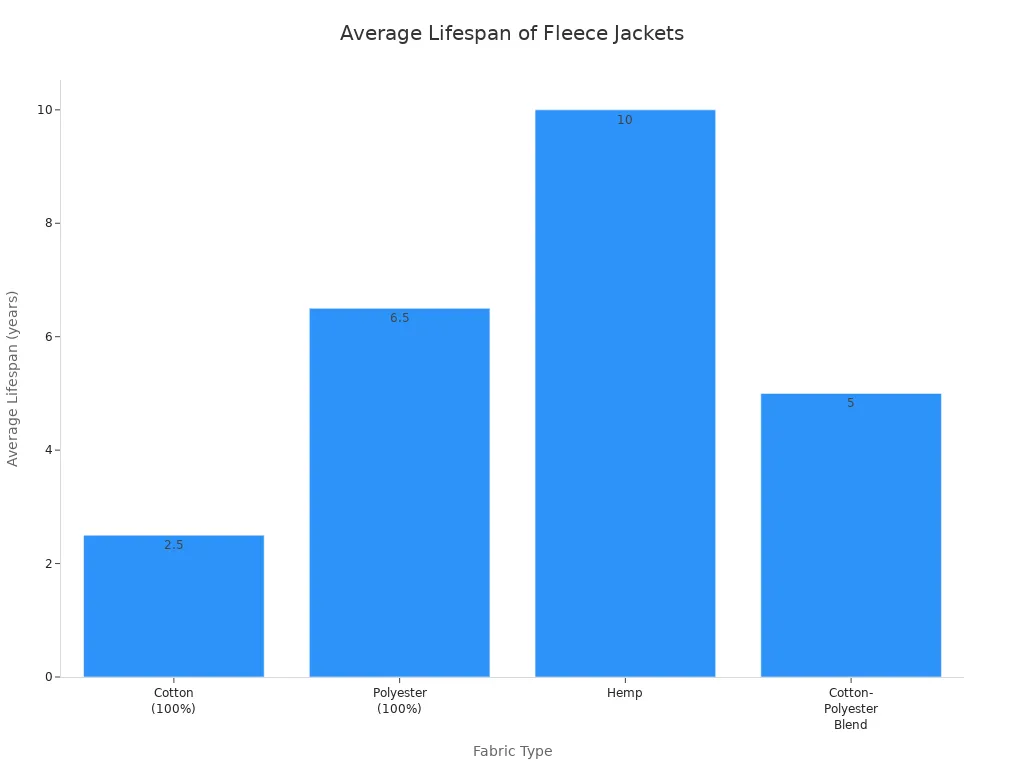
Different fleece types need different care. Most fleece needs cold water washing and low heat drying. Turn jackets inside out and use gentle cycles to keep fleece soft and strong.
| Fleece Type | Washing Tips | Drying Tips | Long-term Care |
|---|---|---|---|
| Polar Fleece | Wash in cold water, turn inside out, use gentle soap | Dry with low heat, do not use high heat | Wash when dirty, gentle cycle, wash with soft fabrics |
| Microfleece | Wash in cold water, turn inside out, use gentle soap | Dry with low heat, do not use high heat | Wash when dirty, gentle cycle, wash with soft fabrics |
| Cotton-Blended Fleece | Wash in cold water, turn inside out, use gentle soap | Dry with low heat, do not use high heat | Wash when dirty, gentle cycle, wash with soft fabrics |
| French Terry Fleece | Wash in cold water, turn inside out, use gentle soap | Dry with low heat, do not use high heat | Wash when dirty, gentle cycle, wash with soft fabrics |
Sustainability and Environmental Impact
Sustainability is important when picking fleece jackets. Hemp fleece and organic cotton fleece have lower carbon footprints than polyester fleece. Bamboo fleece uses less water and energy to make. The table below shows the carbon footprints of different fleece fabrics:
| Fiber Type | Crop Cultivation (KG CO2) | Fiber Production (KG CO2) | Total (KG CO2) |
|---|---|---|---|
| Polyester USA | 0.00 | 9.52 | 9.52 |
| Cotton, Conventional, USA | 4.20 | 1.70 | 5.90 |
| Hemp, Conventional | 1.90 | 2.15 | 4.05 |
| Cotton, Organic, India | 2.00 | 1.80 | 3.80 |
| Cotton, Organic, USA | 0.90 | 1.45 | 2.35 |
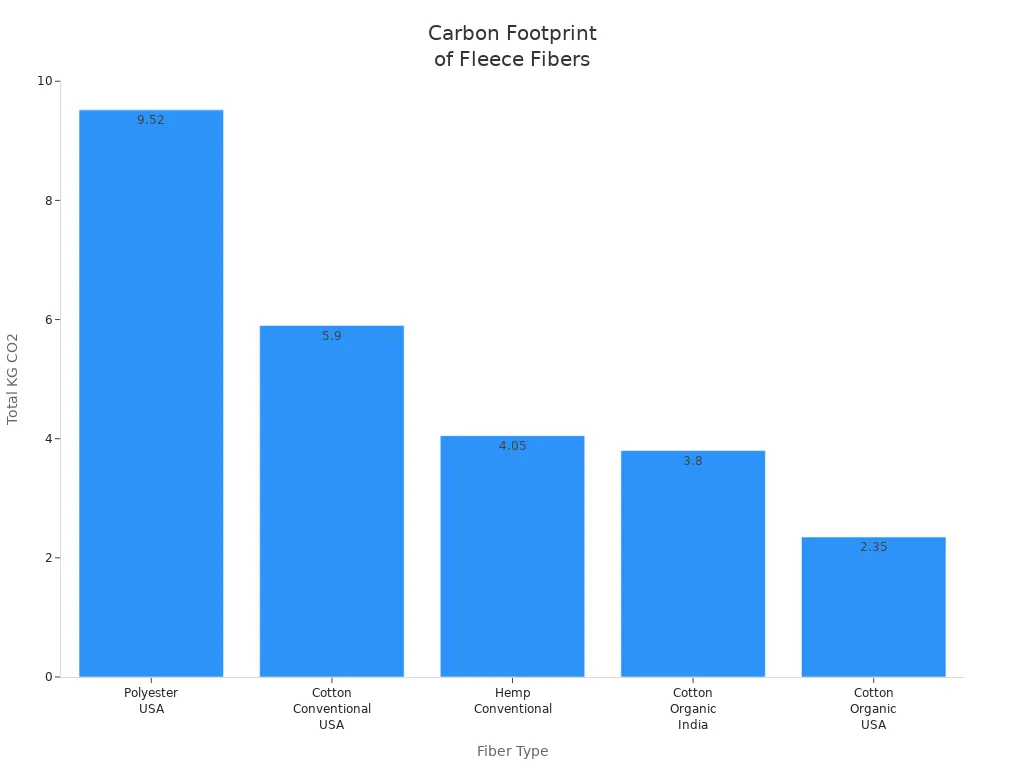
If you want to help the planet, pick fleece jackets made from hemp, bamboo, or recycled polyester. These choices use fewer resources and make less pollution.
Fleece jackets come in different styles. Each style has its own good points. The table below shows how fleece types are not the same. They give different warmth, breathability, and uses:
| Fleece Type | Key Feature |
|---|---|
| Microfleece | Lightweight comfort, layering |
| Polar Fleece | Extra warmth, cold weather |
| Sherpa Fleece | Thick, wool-like, very warm |
| Cotton Fleece | Breathable, soft, durable |
Think about warmth, wind blocking, features, and caring for the planet when you pick a fleece. People who live where it is cold often choose thick fleece. People in warmer places like light fleece for everyday use.
FAQ
What is the warmest type of fleece for jackets?
Polar fleece keeps you the warmest. Its thick fibers trap air. This helps hold heat inside. People wear polar fleece in cold weather. It is good for outdoor fun.
Are fleece jackets made from recycled materials?
Many companies use recycled polyester in jackets. This polyester comes from plastic bottles. Recycled fleece helps cut down on waste. It also lowers pollution.
Can people with sensitive skin wear fleece jackets?
Bamboo fleece feels soft and gentle. People with sensitive skin like bamboo fleece. The fabric does not bother skin. It helps keep skin comfy.
How should someone wash a fleece jacket?
Wash fleece jackets in cold water. Use gentle soap and turn them inside out. Dry on low heat to keep the fabric soft. This helps the jacket last longer.
Which fleece material is best for the environment?
Hemp fleece and bamboo fleece are better for the planet. They use less water and energy. People who care about nature pick hemp or bamboo fleece.